EPREL and the A to G energy label for light sources: efficacy thresholds, registration and the fluorescent phase-out dates
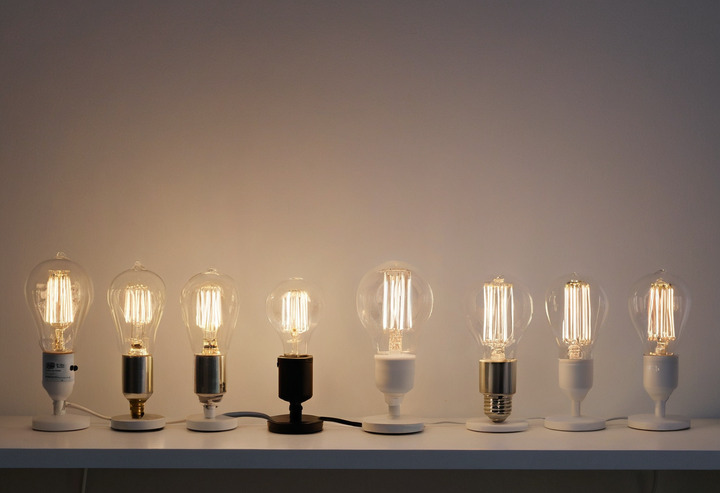
Delegated Regulation (EU) 2019/2015 rescaled the energy label for light sources to a single A to G scale on 1 September 2021, and Regulation (EU) 2019/2020 set the ecodesign floor beneath it. Every labelled lamp must be registered in the European Product Registry for Energy Labelling, EPREL, before it is sold, and the QR code on the label opens that record.
What the light source energy label shows and where it applies
Delegated Regulation (EU) 2019/2015 requires every light source placed on the EU market from 1 September 2021 to carry an energy label showing its class from A to G, its energy consumption in kWh per 1000 hours and a QR code that opens the product's record in the EPREL database, and the class is calculated from the total mains efficacy, the declared useful luminous flux in lumens divided by the declared on-mode power in watts, according to the regulation's text on EUR-Lex.
The label replaced the older A++ to E scale for lamps. Under the earlier rules the best LED lamps clustered at A++ and the scale had lost its meaning; the 2019 rescaling reset the top of the scale so that in September 2021 almost no product qualified for class A, and most LED lamps landed in classes D to F.
The label applies to the light source, not to the fitting. The separate energy label for luminaires was discontinued from 25 December 2019, and suppliers of containing products such as luminaires, furniture with built-in lighting or extractor hoods must instead provide information on the light sources inside them, per the regulation and the LEDVANCE FAQ on the two regulations.
The A to G efficacy thresholds in annex II of Regulation (EU) 2019/2015
Annex II of Delegated Regulation (EU) 2019/2015 assigns class A to a light source with a total mains efficacy of 210 lm/W or more, class B at 150 lm/W or more, class C at 110 lm/W or more, class D at 80 lm/W or more, class E at 60 lm/W or more, class F at 40 lm/W or more and class G below 40 lm/W. The efficacy is measured at the mains, so the losses of any built-in driver or control gear count against the lamp.
| Energy class (annex II) | Total mains efficacy |
|---|---|
| A | 210 lm/W or more |
| B | 150 lm/W or more |
| C | 110 lm/W or more |
| D | 80 lm/W or more |
| E | 60 lm/W or more |
| F | 40 lm/W or more |
| G | below 40 lm/W |
The thresholds place the common lamp types on the scale. A halogen lamp at 15 lm/W to 20 lm/W is class G. A compact fluorescent lamp at 60 lm/W is class E. A 2021 LED filament lamp at 100 lm/W is class D; a lamp at 140 lm/W is class C; a lamp at 160 lm/W is class B. Only a light source above 210 lm/W reaches class A.
The energy consumption figure on the label is in kWh per 1000 hours, so a 7 W lamp shows 7 kWh/1000 h. At 1000 hours of use a year, the difference between a 40 W halogen and a 5 W LED of the same 400 lm output is 35 kWh a year per lamp.
The label also sets the ordering of a shopping list for a fit-out. Two lamps of the same lumen output and colour temperature can sit in different classes, and the class is the quickest check that the lamp specified for an office lit to EN 12464-1 lighting levels will also meet an energy target.
How EPREL registration works for suppliers and buyers
The European Product Registry for Energy Labelling, EPREL, is the European Commission database in which a supplier must enter the parameters of the product information sheet and the content of the technical documentation for every energy-labelled model before the model is placed on the EU market, and the Commission's energy-efficient products site describes EPREL as a tool that helps consumers find the most efficient energy-labelled products.
The register has two sides. The public side shows the label, the product information sheet and the declared values for any registered model, reached by scanning the QR code on the label or by searching the model identifier. The compliance side holds the technical documentation and is open to market surveillance authorities, who can check a declared efficacy against test reports without contacting the supplier.
For a buyer, the practical use is verification. A model identifier printed on a lamp box can be looked up to confirm that the model is registered, that the class on the box matches the register, and that the declared lumen output, power, colour rendering index and lifetime match the specification sheet the supplier sent. A model missing from EPREL cannot lawfully be sold in the EU.
The register covers every product group with an energy label, not only lighting: refrigerators, washing machines, dishwashers, televisions and displays, tyres and heating products all use the same database, and the QR code format is the same across them.
The ecodesign rules behind the label: Regulation (EU) 2019/2020
Regulation (EU) 2019/2020, applicable from 1 September 2021, sets the ecodesign requirements that a light source must meet to be sold at all, regardless of its label class, and requires that light sources and separate control gears inside containing products can be replaced with commonly available tools, according to the regulation's text on EUR-Lex. The regulation replaced Regulations (EC) No 244/2009, (EC) No 245/2009 and (EU) No 1194/2012, according to the Commission's light sources page.
The functional requirements limit flicker and stroboscopic effect. Per LEDVANCE, light sources placed on the market from September 2021 must meet a short-term flicker metric PstLM of 1 or less and a stroboscopic visibility measure SVM of 0.9 or less, and from September 2024 the SVM limit fell to 0.4. The regulation defines PstLM equal to 1 as the level at which an average observer has a 50 percent probability of detecting flicker, and SVM equal to 1 as the visibility threshold for the stroboscopic effect.
Lifetime is defined by lumen maintenance. The regulation defines the L70B50 lifetime as the point at which the light output of a light source has degraded below 70 percent of its initial luminous flux for half of the population of lamps, and this figure appears on the product information sheet in EPREL.
The Commission estimates the savings from the lighting rules at 96 TWh of electricity in 2030, after 81 TWh in 2020, according to its light sources page. The regulation's own recital puts the estimated annual final energy savings from lighting in the ecodesign working plan at 41.9 TWh in 2030.
| Requirement (Regulation (EU) 2019/2020) | Value or date |
|---|---|
| Date of application | 1 September 2021 |
| Anti-circumvention article | applies from 25 December 2019 |
| Flicker limit PstLM | 1 or less from September 2021 |
| Stroboscopic limit SVM | 0.9 or less from September 2021; 0.4 or less from September 2024 |
| Lifetime metric | L70B50, output above 70 percent of initial flux for half the lamps |
| Light sources in containing products | replaceable with commonly available tools |
| Regulations replaced | (EC) No 244/2009, (EC) No 245/2009, (EU) No 1194/2012 |
The 2023 fluorescent phase-out and what it means for existing fittings
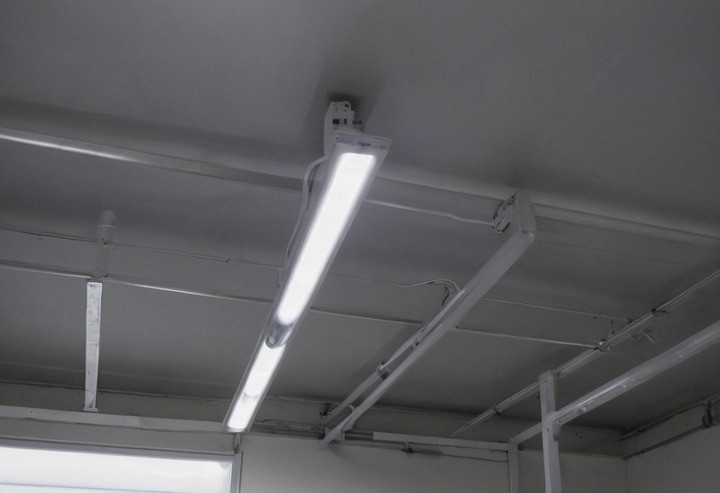
Compact fluorescent lamps with plug-in bases could no longer be placed on the EU market from 25 February 2023, and T8 and T5 linear fluorescent lamps from 25 August 2023, because the exemptions for mercury in those lamps in annex III of the RoHS Directive were allowed to expire after the Commission revised the annex in spring 2022, according to the lighting retailer watt24's guide to the ban. The ban applies to placing on the market, which in practice means production and import; the sale, purchase and use of existing stock remained allowed.
| Lamp type | Last date for placing on the EU market | Legal basis |
|---|---|---|
| Compact fluorescent lamps, plug-in base (CFLni) | 24 February 2023 | RoHS annex III exemption expiry |
| T8 linear fluorescent lamps | 24 August 2023 | RoHS annex III exemption expiry |
| T5 linear fluorescent lamps | 24 August 2023 | RoHS annex III exemption expiry |
| Light sources labelled A++ to E before 1 September 2021 | sold with old label until 1 March 2023 | Delegated Regulation (EU) 2019/2015 transition |
| High-pressure discharge and special-purpose lamps | exemptions extended by 3 to 5 years | RoHS annex III (planned, per watt24) |
The lighting manufacturer ERCO summarises the same sequence: since February 2023 the RoHS Directive has gradually banned conventional light sources, and since August 2023 T8 and T5 tubes may no longer be placed on the EU market. For a facility manager the consequence is a stock problem rather than a legal one. A building with T8 batten fittings can keep running them and buy remaining tubes from stock, but replacement tubes become scarcer and dearer each year, and a retrofit to LED tubes or new luminaires changes the light output, glare and uniformity figures that the room was designed to.
A retrofit therefore needs a lighting check as well as an electrical one. The EN 12464-1 lighting standard sets 500 lx on an office desk with a glare limit of 19, and an LED tube with a different beam angle can raise glare even while raising efficiency, as the lighting standard article explains.
How to read a light source label in a fit-out specification
A light source label in a fit-out specification is read in four figures: the class letter, the kWh per 1000 hours, the model identifier for the EPREL lookup, and the lumen output on the packaging, and together they let a specifier compare lamps by delivered light rather than by watts. A lamp described only by wattage cannot be checked against either the label or the lighting standard.
- Read the class letter and the kWh/1000 h on the label. A class F lamp at 40 lm/W to 60 lm/W uses two to three times the energy of a class C lamp at 110 lm/W to 150 lm/W for the same light.
- Scan the QR code or search the model identifier in EPREL to confirm registration and read the declared lumen output, colour rendering index and L70B50 lifetime.
- Check the lamp type against the 2023 phase-out table. A specification that still names T8 or T5 tubes or plug-in compact fluorescent lamps describes products that can no longer be placed on the EU market.
- Confirm that the luminaire allows replacement of the light source with commonly available tools, as Regulation (EU) 2019/2020 requires of containing products.
The two labels on an interior product answer different questions. The energy label on a lamp is mandatory and states measured efficiency; the EU Ecolabel on a chair or a tin of paint is voluntary and states compliance with a set of environmental criteria, as the article on EU Ecolabel criteria for furniture and paints explains. Each label is checked against a public register: EPREL for the energy label and the Commission's Ecolabel catalogue for the flower. The hourly labour cost of the electrician who fits the lamp is a separate line, set out in the article on interior fit-out costs across six EU countries.
Questions and answers
What efficacy does a light source need for energy class A?
Under Delegated Regulation (EU) 2019/2015, annex II, a light source is class A when its total mains efficacy is 210 lm/W or more, class B at 150 lm/W or more, class C at 110 lm/W or more, class D at 80 lm/W or more, class E at 60 lm/W or more, class F at 40 lm/W or more, and class G below 40 lm/W.
What is EPREL?
EPREL is the European Product Registry for Energy Labelling, the European Commission database in which suppliers must register every energy-labelled model before placing it on the EU market. Consumers reach a model's record by scanning the QR code printed on the energy label, and the public site describes itself as a way to find the most efficient energy-labelled products.
When did the new light source energy label start?
The rescaled A to G label applied from 1 September 2021 under Delegated Regulation (EU) 2019/2015. Light sources placed on the market before that date could be sold with their old labels until 1 March 2023, according to the LEDVANCE FAQ on the regulation.
When were fluorescent lamps banned in the EU?
Compact fluorescent lamps with plug-in bases could no longer be placed on the EU market from 25 February 2023, and T8 and T5 linear fluorescent lamps from 25 August 2023, under the expiry of mercury exemptions in annex III of the RoHS Directive. Sale and use of existing stock remained allowed.
Do luminaires carry an energy label?
No. The separate label for luminaires was discontinued from 25 December 2019. The label applies to the light source, and suppliers of containing products such as luminaires must provide information on the light sources they contain and ensure that the light sources can be replaced with commonly available tools under Regulation (EU) 2019/2020.