EN 1335-1:2020 office chair dimensions and EN 14749 storage unit requirements: the numbers in millimetres and kilograms
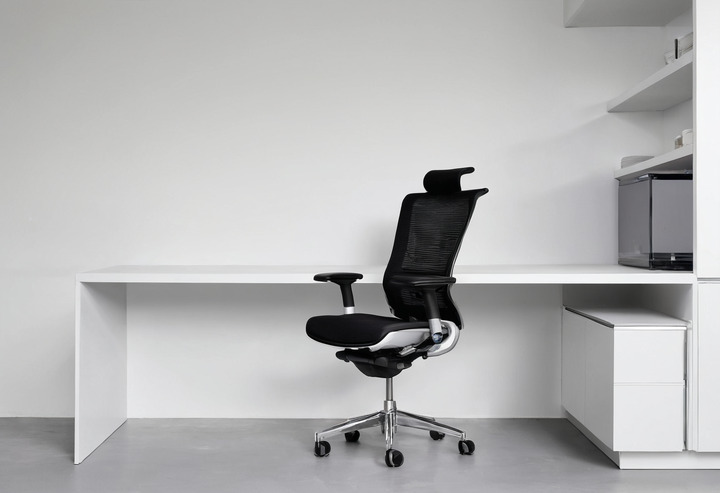
Two European furniture standards fix the dimensions and loads that a European office chair or a domestic storage unit must meet. EN 1335-1:2020 defines four office work chair types, Ax, A, B and C, by seat height range, seat depth, lumbar support and armrest dimensions. EN 14749 sets the safety, strength and stability requirements for kitchen and domestic storage units, including the loads a wall cupboard must hold in test.
What EN 1335-1:2020 defines for office work chairs
EN 1335-1:2020 defines the dimensions of four types of office work chair, Ax, A, B and C, and the method for measuring them, so that a buyer can specify a chair by type and know the seat height range, seat depth, lumbar support travel, armrest geometry and backrest size it must deliver. The standard is part 1 of EN 1335; part 2, EN 1335-2:2018, sets the safety, strength and durability requirements and contains the test loads, masses and cycles in its annex A, according to the furniture test laboratory Furnitest, which also lists the amended edition EN 1335-1:2020+A1:2022.
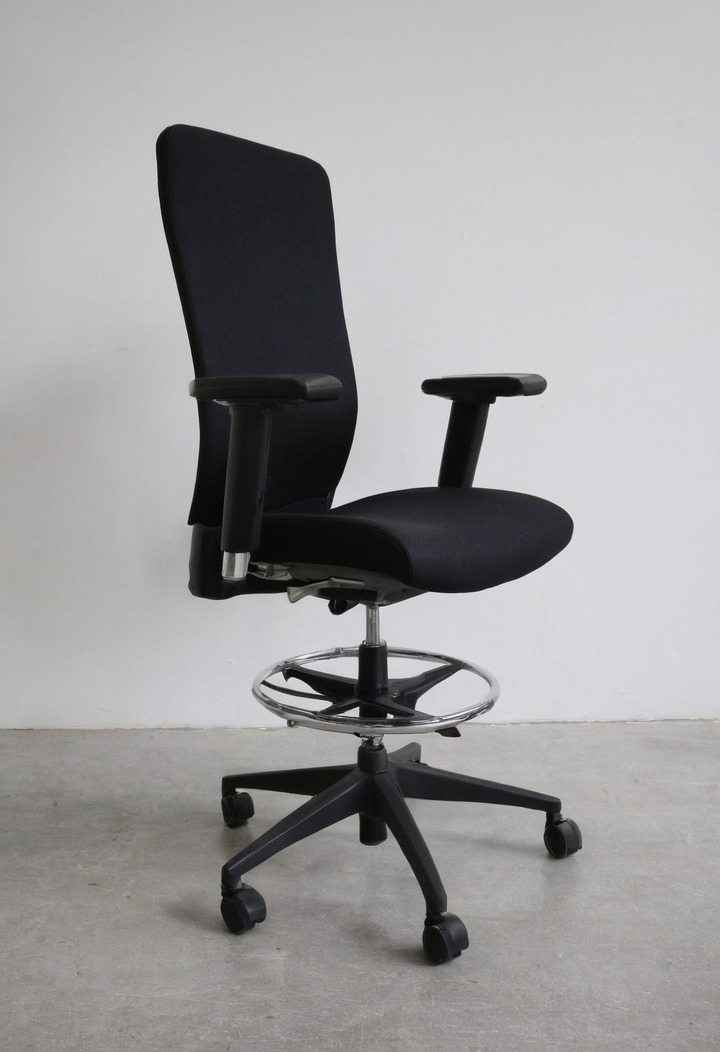
The four types form a ladder of adjustability. Type Ax offers the widest seat height range and the deepest seat adjustment. Type A is the full-specification task chair. Type B corresponds roughly to the type A of the previous edition, and type C covers executive or simpler chairs, according to the Italian chair mechanism maker SBS. SBS states that type Ax was designed mainly for the markets of northern Europe, where people can be both particularly tall and particularly small.
The measurement method changed with the 2020 edition. Dimensions are determined under ISO 24496, which loads the backrest to simulate the weight of a seated person leaning against it, so the measured seat depth and backrest height reflect the chair in use rather than the chair empty.
EN 1335-1:2020 table 2: seat height, seat depth and lumbar support by type
EN 1335-1:2020 table 2 sets a seat height range of 400 mm to 540 mm for type Ax, 400 mm to 520 mm for type A, 420 mm to 510 mm for type B and 430 mm to 480 mm for type C, and requires a minimum adjustment range of 160 mm, 130 mm, 100 mm and 80 mm respectively, as published in the licensed copy of EN 1335-1:2020 hosted by the Dutch retailer Bureaustoel.nl. All dimensions in the table are in millimetres.
| Dimension (EN 1335-1:2020 table 2) | Type Ax | Type A | Type B | Type C |
|---|---|---|---|---|
| Seat height, min to max | 400 to 540 | 400 to 520 | 420 to 510 | 430 to 480 |
| Seat height, minimum adjustment range | 160 | 130 | 100 | 80 |
| Adjustable seat depth, min to max | 380 to 430 | 425 to 450 | 425 to 445 | 425 minimum |
| Seat depth, minimum adjustment range | 70 | 70 | 50 | none required |
| Fixed seat depth | not permitted | not permitted | 425 to 485 | 425 minimum |
| Adjustable lumbar support height | 170 to 300 | 170 to 300 | 170 to 300 | 170 to 300 |
| Lumbar support, minimum adjustment range | 70 | 70 | 50 | none required |
| Fixed lumbar support height | not permitted | not permitted | 170 to 300 | 170 to 300 |
The seat height figures are the practical difference between the types. A type A chair must travel at least 130 mm and reach down to 400 mm, which covers a short user with the feet flat on the floor and a tall user without the thighs sloping downwards. A type C chair travels only 80 mm and stops at 430 mm, so a short user needs a footrest.
Seat depth adjustment is where type Ax departs from type A. Type Ax must adjust between 380 mm and 430 mm, 45 mm shallower at the minimum than type A, so that a small user can sit against the backrest without pressure behind the knee. Type A must adjust between 425 mm and 450 mm.
EN 1335-1:2020 armrest, seat pad and backrest dimensions
EN 1335-1:2020 requires adjustable armrests on types Ax and A to move between 200 mm and 290 mm above the seat with at least 100 mm of travel, sets a minimum seat pad width of 400 mm and depth of 380 mm for every type, and sets a minimum backrest height and width of 360 mm and a minimum backrest radius of 400 mm for every type, per table 2 of the licensed copy.
| Dimension (EN 1335-1:2020 table 2) | Type Ax | Type A | Type B | Type C |
|---|---|---|---|---|
| Armrest height, adjustable | 200 to 290 (100 travel) | 200 to 290 (100 travel) | 225 to 250 (50 travel) | 200 to 250 |
| Armrest height, not adjustable | not permitted | not permitted | 225 to 275 | 200 to 250 |
| Clear distance between armrest pads, adjustable | 410 to 510 | 410 to 510 | 460 to 510 | 460 to 510 |
| Clear distance between armrest pads, fixed | not permitted | not permitted | 460 to 510 | 460 minimum |
| Hip breadth clearance, armrests widest | 480 minimum | 480 minimum | 460 minimum | 460 minimum |
| Backrest to front of armrests, maximum | 200 | 300 | 350 | 400 |
| Armrest length, minimum | 150 | 150 | 150 | 150 |
| Armrest width, minimum | 50 | 50 | 40 | 40 |
| Seat pad width, minimum | 400 | 400 | 400 | 400 |
| Seat pad depth, minimum | 380 | 380 | 380 | 380 |
| Backrest height and width, minimum | 360 | 360 | 360 | 360 |
| Offset of the underframe, maximum | 415 | 415 | 415 | 415 |
The maximum distance from the backrest to the front of the armrests is the most restrictive line for type Ax, at 200 mm against 400 mm for type C. A short armrest that ends well behind the front edge of the seat lets the user pull the chair under the desk; a long armrest on a type C chair can stop the chair 100 mm or more from the desk edge.
The offset of the underframe, 415 mm maximum for every type, limits how far the base extends in front of the seat and keeps the base under the user's feet. SBS summarises the type A changes as a minimum of 13 cm of seat height adjustment, a minimum seat height of 40 cm and 70 mm of seat depth adjustment.
The lighting on the desk in front of the chair is set by a separate standard, described in the article on EN 12464-1 lighting levels for offices and other indoor workplaces.
What EN 14749 covers for domestic and kitchen storage units
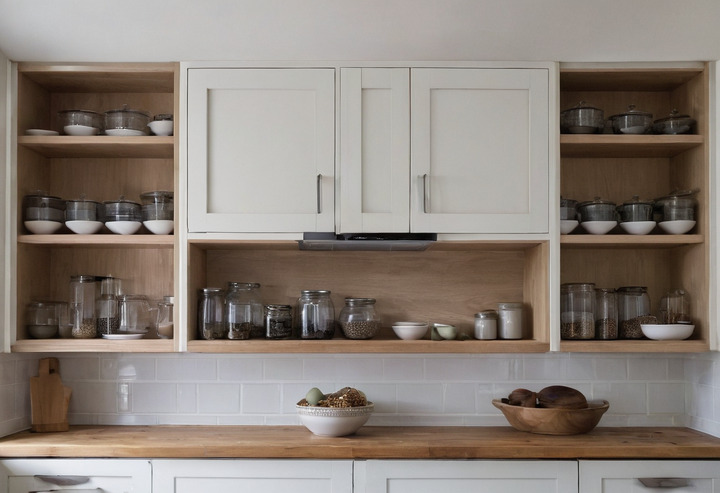
EN 14749 specifies the safety requirements and test methods for kitchen and bathroom storage units, domestic storage furniture and kitchen worktops, including free-standing units, wall hanging units and their components, and the current edition is EN 14749:2016+A1:2022, approved by CEN on 21 November 2015 with amendment 1 approved on 13 March 2022 and published in May 2022, as shown on the title pages of the Slovenian adoption SIST EN 14749:2016+A1:2022.
The scope of EN 14749 stops at four boundaries:
- Non-domestic, office, industrial, catering and retail storage are excluded and fall under EN 16121.
- Resistance to ageing and degradation is not covered.
- Flammability and electrical safety are not covered.
- Safety that depends on the building is excluded: the wall attachment test covers the cabinet, its components and its wall fixing device, not the wall.
The 2016 edition moved most of the test methods out of EN 14749 and into EN 16122:2012, the test method standard for domestic and non-domestic storage furniture, according to the UK test house SATRA. EN 14749 keeps the requirements and the pass criteria; EN 16122 describes how the loads are applied.
The numeric values quoted in the next two sections come from the 2005 edition of the standard, BS EN 14749:2005, published in full by the Japanese kitchen industry association, because the 2016 text is sold rather than published. The 2005 edition defines the requirements that EN 14749:2016 carried forward; a buyer specifying against the current edition should confirm any figure in the 2016+A1:2022 text.
EN 14749:2005 test loads for shelves, rails and wall hanging units
EN 14749:2005 table 1 loads every horizontal storage area, including shelves, bottoms, tops and flaps, at 0.65 kg/dm2, extension elements and fixed baskets at 0.2 kg/dm3, clothes rails at 4 kg/dm and suspended filing pockets at 2.5 kg/dm, and clause 6.4.3 then overloads wall hanging units by shelf position. The forces in the standard may be replaced by masses at the relationship of 10 N to 1 kg.
| Load in EN 14749:2005 | Value |
|---|---|
| Horizontal storage areas: shelves, bottoms, tops, flaps (table 1) | 0.65 kg/dm2 (65 kg/m2) |
| Extension elements and fixed baskets (table 1) | 0.2 kg/dm3 |
| Clothes rails (table 1) | 4 kg/dm |
| Suspended filing pockets (table 1) | 2.5 kg/dm |
| Wall hanging unit overload, bottom (6.4.3) | 250 kg/m2 |
| Wall hanging unit overload, first shelf (6.4.3) | 150 kg/m2 |
| Wall hanging unit overload, second shelf (6.4.3) | 100 kg/m2 |
| Wall hanging unit overload, third and following shelves (6.4.3) | 65 kg/m2 |
| Wall hanging unit overload, top surface (6.4.3) | 50 kg/m2 |
The worked example in annex B of the 2005 edition shows what the overload means for a real cabinet. A wall unit with 0.35 m2 of bottom, three shelves and a top carries 87.50 kg on the bottom, 52.50 kg on the first shelf, 35.00 kg on the second, 22.75 kg on the third and 17.50 kg on the top, a total test load of 215.25 kg. Where the internal volume exceeds 0.225 m3 the loads are multiplied by a reduction factor; in the example the factor 0.89 reduces the total to 191.57 kg and the bottom load to 63.82 kg.
If the number of shelves is not fixed by the unit's structure, the tester divides the internal height in millimetres by 200, takes the lower integer and subtracts one to get the number of shelves used in the test. A 720 mm high wall unit therefore tests with two shelves.
Doors and worktops have their own loads in the 2005 text. A hinged door is loaded with 30 kg and swung 10 full cycles from 45 degrees to 10 degrees from closed. An unloaded shelf must not tip under a downward force of 100 N applied 25 mm in from the front edge. A vertical force of 750 N is applied 10 times to the top surface 50 mm from the outer edge, and 1000 N is applied 10 times to worktops.
EN 14749:2005 safety distances, glass and stability rules
EN 14749:2005 requires that movable parts accessible in normal use keep a safety distance of 8 mm or less or 25 mm or more in every position, that vertically moving units keep a safety height of at least 100 mm above the floor, and that any extension element heavier than 10 kg either has open stops resisting a 200 N pull or is supplied with product information to that effect. Components the user can touch must have no burrs, sharp edges or open-ended tubes.
Glass is covered by size and position. Any external vertical glass component of 0.1 m2 or more, with a smallest dimension of at least 200 mm and any part lower than 900 mm above the floor, must not break when tested to EN 14072, or must break in the manner specified in EN 14072:2003 clause 7. Glass that meets the fragmentation clause of EN 12150-1:2000 (thermally toughened soda lime silicate glass) need not be impact tested.
Lids are covered by weight and height. A storage unit closed by a horizontal lid that is 1000 mm or less from the floor and weighs 0.25 kg or more must be fitted with a means, such as a self-locking or friction stay, that prevents closure under a force of less than 8 N, to stop children's heads and necks being trapped.
The strength tests apply only where a fall would injure. With the exception of glass and stability, the requirements of clause 6.3 apply to loaded units whose centre of gravity is at or above 900 mm from the floor with a total mass of 10 kg or more, or at or above 350 mm with a total mass of 35 kg or more. The stability requirements apply only to units taller than 600 mm where the height of the centre of gravity in metres multiplied by the total mass in kilograms exceeds 6.
A buyer who wants a chair or a storage unit with an environmental label on top of these safety standards can read the article on EU Ecolabel criteria for furniture and paints, which requires compliance with the relevant EN durability standards as one of its criteria. The reaction to fire of the panels the units are made from is set out in the article on EN 13501-1 fire classes, which lists the classes that particleboard and MDF achieve without testing.
Questions and answers
What seat height range does EN 1335-1:2020 require for an office chair?
EN 1335-1:2020 table 2 requires a seat height range of 400 mm to 540 mm for a type Ax chair, 400 mm to 520 mm for type A, 420 mm to 510 mm for type B and 430 mm to 480 mm for type C, with minimum adjustment ranges of 160 mm, 130 mm, 100 mm and 80 mm respectively.
What is the difference between type A, B and C office chairs in EN 1335?
The types differ by adjustability. Type A requires adjustable seat depth (425 mm to 450 mm, at least 70 mm of travel), adjustable lumbar support with at least 70 mm of travel and adjustable armrest height of 200 mm to 290 mm. Type B accepts a fixed seat depth of 425 mm to 485 mm and 50 mm of lumbar travel. Type C accepts fixed lumbar support and a seat height range of only 80 mm.
What does the new type Ax office chair cover?
Type Ax was introduced in EN 1335-1:2020 for markets where people may be both particularly tall and particularly small, according to the chair component maker SBS. Type Ax requires a seat height range of 400 mm to 540 mm and an adjustable seat depth of 380 mm to 430 mm.
What loads does EN 14749 use to test a wall-hung kitchen cabinet?
The overload test in EN 14749:2005, clause 6.4.3, loads the bottom of a wall hanging unit at 250 kg/m2, the first shelf at 150 kg/m2, the second shelf at 100 kg/m2, the third and following shelves at 65 kg/m2 and the top surface at 50 kg/m2. The worked example in annex B gives a total test load of 215.25 kg for a unit with 0.35 m2 shelves.
Which edition of EN 14749 is current?
The current edition is EN 14749:2016+A1:2022, approved by CEN on 21 November 2015 with amendment 1 approved on 13 March 2022 and published in May 2022. The 2016 edition moved most test methods into EN 16122:2012, the test method standard for domestic and non-domestic storage furniture.