EN 13501-1 fire classes explained: what A1, B-s1,d0, D-s2,d0 and Cfl-s1 mean for interior finishes
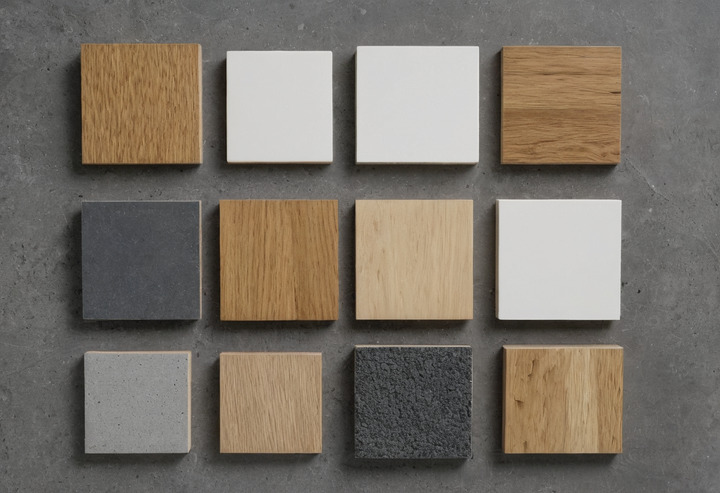
EN 13501-1 is the European classification standard for the reaction to fire of construction products, and every wall lining, ceiling board, floor covering and decorative panel sold with CE marking carries one of its classes. The class combines a main letter from A1 to F with a smoke class s1 to s3 and a flaming droplet class d0 to d2, and floor coverings carry the suffix fl.
What EN 13501-1 classifies and how the class is written
EN 13501-1 classifies the reaction to fire of construction products into seven main classes, A1, A2, B, C, D, E and F, and adds a smoke production class (s1, s2, s3) and a flaming droplets class (d0, d1, d2) to classes A2 to D, so that a wall lining is sold as, for example, B-s1,d0 rather than as a single letter. The current edition is EN 13501-1:2018, according to the fire retardant treatment supplier Woodsafe.
Reaction to fire describes how a product behaves when it is exposed to a fire in its early stage: whether it ignites, how fast it releases heat, how far flame spreads across it, how much smoke it produces and whether it drops burning material. Reaction to fire is not fire resistance. Fire resistance, classified under EN 13501-2, describes how long a wall, floor or door holds back a fully developed fire, in minutes.
Floor coverings carry the same letters with the suffix fl, from A1fl to Ffl, because they are tested by a different method and a floor cannot drop burning material onto the room below. Linear pipe insulation carries the suffix L. Everything else, including wall panels, ceiling boards, wallpapers, textiles fixed to walls and furniture-grade boards used as linings, is classified without a suffix.
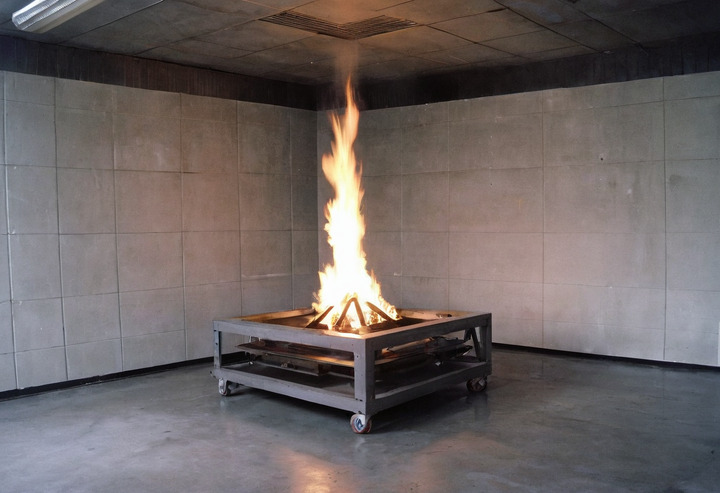
EN 13501-1 test thresholds for classes A1 to F
EN 13501-1 assigns class A1 to a product that, in the EN ISO 1182 furnace test, shows a temperature rise of 30 degrees C or less, a mass loss of 50 percent or less and no sustained flaming, and that has a gross calorific potential under 2.0 MJ/kg in EN ISO 1716; class A2 relaxes the furnace limits to a 50 degrees C rise and 20 seconds of flaming and the calorific potential to 3.0 MJ/kg, according to the test laboratory Measurlabs.
Classes A2, B, C and D for non-flooring products are separated by the single burning item test, EN 13823, in which a corner of two panels is exposed to a 30 kW burner and the fire growth rate index (FIGRA) and total heat release in 600 seconds (THR600s) are measured. Classes B to E also require the small flame test EN ISO 11925-2.
| Class | Main test and thresholds (Measurlabs summary) | Small flame test EN ISO 11925-2 |
|---|---|---|
| A1 | EN ISO 1182: rise 30 degrees C or less, mass loss 50 percent or less, no sustained flaming; EN ISO 1716: under 2.0 MJ/kg | not required |
| A2 | EN ISO 1182: rise 50 degrees C or less, flaming 20 s or less, or EN ISO 1716: 3.0 MJ/kg or less; plus EN 13823: FIGRA 120 W/s or less, THR600s 7.5 MJ or less | not required |
| B | EN 13823: FIGRA 120 W/s or less, THR600s 7.5 MJ or less, no lateral flame spread to the specimen edge | flame spread 150 mm or less within 60 s |
| C | EN 13823: FIGRA 250 W/s or less, THR600s 15 MJ or less | flame spread 150 mm or less within 60 s |
| D | EN 13823: FIGRA 750 W/s or less | flame spread 150 mm or less within 60 s |
| E | none | flame spread 150 mm or less within 20 s after 15 s exposure |
| F | fails the criteria for class E | not applicable |
The gap between B and C is the gap that matters for interiors. A class B lining releases heat at no more than 120 W/s and no more than 7.5 MJ in the first ten minutes of the test; a class C lining may release heat twice as fast, at 250 W/s, and twice as much, at 15 MJ. A class D lining may grow at 750 W/s, six times the class B limit, which is why untreated wood sits in class D.
Smoke classes s1 to s3 and droplet classes d0 to d2
EN 13501-1 assigns smoke class s1 when the smoke growth rate (SMOGRA) in EN 13823 is 30 m2/s2 or less and the total smoke production in 600 seconds is 50 m2 or less, s2 when SMOGRA is 180 m2/s2 or less and total smoke production is 200 m2 or less, and s3 when neither condition is met, per the Measurlabs summary. The droplet classes follow the same test: d0 means no flaming droplets or particles within 600 seconds, d1 means no flaming droplets persisting longer than 10 seconds, and d2 means the product fails d1 or ignites the filter paper beneath the specimen.
| Sub-class | Criterion in EN 13823 (non-flooring products) |
|---|---|
| s1 | SMOGRA 30 m2/s2 or less and TSP600s 50 m2 or less |
| s2 | SMOGRA 180 m2/s2 or less and TSP600s 200 m2 or less |
| s3 | s1 and s2 not met |
| d0 | no flaming droplets or particles within 600 s |
| d1 | no flaming droplets or particles persisting longer than 10 s |
| d2 | d0 and d1 not met, or ignition of the filter paper |
Woodsafe states that s1 is the class that is always prescribed indoors, because smoke, not heat, is what stops people reaching an exit. A product classified B-s2,d0 has passed the heat criteria for class B but produces up to four times the smoke of a B-s1,d0 product in the same test. Linear pipe insulation products use looser smoke limits, s1 at 105 m2/s2 and 250 m2, s2 at 580 m2/s2 and 1600 m2, per Measurlabs.
The droplet class is decisive for ceilings. A ceiling panel classified d2 can drop burning material onto the floor and onto people below it, and most national building codes therefore require d0 for ceilings in escape routes.
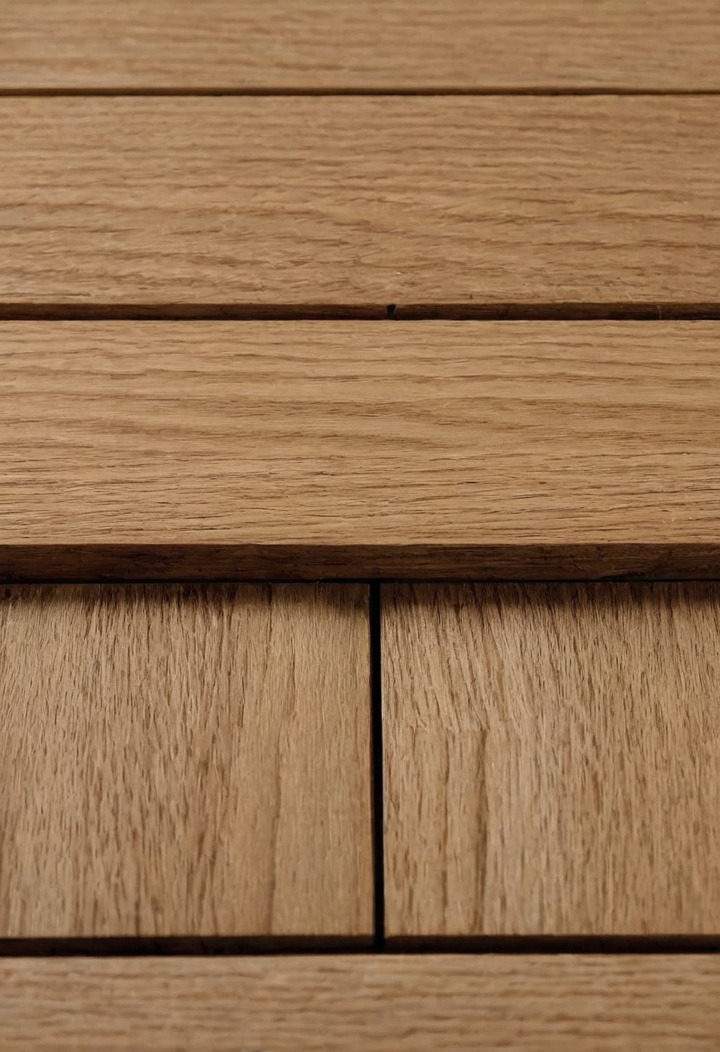
Floor covering classes A1fl to Ffl and the critical heat flux test
EN 13501-1 classifies floor coverings by the critical heat flux in the radiant panel test EN ISO 9239-1: A2fl and Bfl require a critical flux of at least 8.0 kW/m2, Cfl at least 4.5 kW/m2 and Dfl at least 3 kW/m2, with the s1 or s2 smoke class taken from the same test, per Measurlabs. The critical heat flux is the radiant heat at which flame stops spreading across the floor sample, so a higher figure means a floor that resists flame spread under more heat.
The flooring manufacturer COBA groups the floor classes into four bands: A1fl and A2fl-s1 are non-combustible; Bfl-s1, Cfl-s1, A2fl-s2, Bfl-s2 and Cfl-s2 are flame retardant; Dfl-s1, Dfl-s2 and Efl are normal flammability; and Ffl is easily flammable. COBA notes that EN 13501 replaced the German DIN 4102 classification for products sold across the EU after 2001.
| Floor class | Critical heat flux in EN ISO 9239-1 | COBA band |
|---|---|---|
| A1fl | non-combustible tests as for A1 | non-combustible |
| A2fl | 8.0 kW/m2 or more | non-combustible (s1) or flame retardant (s2) |
| Bfl | 8.0 kW/m2 or more | flame retardant |
| Cfl | 4.5 kW/m2 or more | flame retardant |
| Dfl | 3 kW/m2 or more | normal flammability |
| Efl | small flame test only | normal flammability |
| Ffl | fails class E criteria | easily flammable |
Wood flooring reaches its class without testing under Commission Decision 2006/213/EC, published on EUR-Lex, which lists the density, thickness and installation conditions that earn each class. Decision 2006/213/EC gives solid oak or beech flooring of at least 650 kg/m3 or 680 kg/m3 density and 8 mm thickness, glued to the substrate, class Cfl-s1, and the same species at 20 mm thickness Cfl-s1 with or without an air gap. Generic solid wood flooring of at least 390 kg/m3 at 8 mm without an air gap, or 20 mm with or without one, is Dfl-s1.
Multilayer parquet with an oak top layer of at least 5 mm and a total thickness of 10 mm to 14 mm is Cfl-s1; generic multilayer parquet of at least 500 kg/m3 at 8 mm to 10 mm is Dfl-s1; veneered wood floor covering of at least 800 kg/m3 at 6 mm is Dfl-s1, all per the same decision.
The classes that wood, panels and plasterboard get without testing
Commission Decision 2006/213/EC gives solid wood panelling and cladding of at least 390 kg/m3 density and 12 mm total thickness class D-s2,d0 without further testing, and thinner 9 mm panelling class D-s2,d2 over a closed air gap or D-s2,d0 over an open air gap of 20 mm or less; wood ribbon elements of 18 mm surrounded by open air on all sides are also D-s2,d0. Woodsafe describes D-s2,d0 as the natural performance of wood that has not been modified or painted, and states that flame retardant treatment can lift wood to B-s1,d0 at best.
Wood-based panels used as linings take their classes from Commission Decision 2007/348/EC, which replaced the panel table of Decision 2003/43/EC. Cement-bonded particleboard of at least 1000 kg/m3 and 10 mm, fixed without an air gap, reaches B-s1,d0 as a lining and Bfl-s1 as a floor. Ordinary particleboard of at least 600 kg/m3 at 9 mm to 18 mm reaches D-s2,d0 or D-s2,d2 depending on the air gap behind it, and Dfl-s1 as a floor. Hard and medium fibreboard, MDF, OSB and plywood follow the same pattern at their own minimum densities and thicknesses, and any of these panels at only 3 mm thickness falls to class E or Efl.
The passive fire protection manufacturer Promat gives the standard examples for each class: stone, brick, metals and mineral fibre insulation for A1; gypsum plasterboard and stone wool sandwich panels for A2; wood-cement panels and flame retardant treated wood panels for B; phenolic foam for C; wood and wood products for D; soft fibreboard and flame retarded expanded polystyrene for E; and untreated expanded polystyrene and polyurethane for F.
| Product (without further testing) | Condition | Class |
|---|---|---|
| Gypsum plasterboard | standard example (Promat) | A2 |
| Cement-bonded particleboard | 1000 kg/m3 or more, 10 mm or more, no air gap (2007/348/EC) | B-s1,d0 |
| Solid wood panelling or cladding | 390 kg/m3 or more, 12 mm total (2006/213/EC) | D-s2,d0 |
| Solid wood panelling or cladding | 390 kg/m3 or more, 9 mm total, closed air gap (2006/213/EC) | D-s2,d2 |
| Particleboard, MDF, plywood | at minimum density and 9 mm to 18 mm (2007/348/EC) | D-s2,d0 or D-s2,d2 |
| Any wood-based panel | 3 mm thickness (2007/348/EC) | E |
| Flame retardant treated wood | best achievable (Woodsafe) | B-s1,d0 |
How to read a fire class on a product declaration
A fire class on a declaration of performance is read in three parts, and each part must match the requirement in the national building regulation for the room and the surface where the product will be installed: the letter sets the heat contribution, the s figure sets the smoke and the d figure sets the droplets.
- The letter A1 to F: the contribution to fire, from none (A1) to easily flammable (F).
- The s figure: smoke production, s1 lowest, s3 highest.
- The d figure: flaming droplets, d0 none within 600 s, d2 persistent droplets.
A product declared D-s2,d0 is acceptable where the regulation asks for class D, and unacceptable where the regulation asks for class B or for s1.
The class also depends on the installation conditions in the declaration. A particleboard lining classified D-s2,d0 without an air gap can fall to D-s2,d2 when fixed over a closed cavity, per Decision 2007/348/EC, so the fixing detail is part of the class. A veneered board that has been painted on site is no longer the product that was classified.
Interior finishes interact with the other European standards described on this site. The luminaires that light a room are mounted on the ceiling boards classified here, and their light levels are set by EN 12464-1 lighting requirements for indoor workplaces. Furniture made from the same particleboard and MDF is covered by the EN 1335 and EN 14749 furniture standards for office chairs and storage units, and the formaldehyde limits for those panels appear in the EU Ecolabel furniture criteria.
Questions and answers
What does B-s1,d0 mean under EN 13501-1?
B-s1,d0 is a reaction to fire class in which B means very limited contribution to fire (fire growth rate of 120 W/s or less and total heat release of 7.5 MJ or less in 600 seconds in the EN 13823 single burning item test), s1 means the lowest smoke class (smoke growth rate of 30 m2/s2 or less and total smoke production of 50 m2 or less in 600 seconds) and d0 means no flaming droplets or particles within 600 seconds.
What fire class does untreated wood have?
Untreated solid wood panelling and cladding of at least 390 kg/m3 density and 12 mm thickness is classified D-s2,d0 without further testing under Commission Decision 2006/213/EC. The best class that flame-retardant treated wood can reach is B-s1,d0, according to the treatment supplier Woodsafe.
What is the difference between Cfl-s1 and Dfl-s1 floor coverings?
Cfl-s1 floor coverings withstand a critical heat flux of at least 4.5 kW/m2 in the EN ISO 9239-1 radiant panel test; Dfl-s1 floor coverings withstand at least 3 kW/m2. Both carry the s1 smoke class. Solid oak flooring at 8 mm glued to the substrate reaches Cfl-s1 without testing; generic solid wood flooring of at least 390 kg/m3 reaches Dfl-s1.
Is gypsum plasterboard class A1 or A2?
Gypsum plasterboard is the standard example of a class A2 product under EN 13501-1, according to the passive fire protection manufacturer Promat, meaning very limited combustibility with a gross calorific potential of 3.0 MJ/kg or less. Class A1 covers stone, brick, metals and inorganic materials with less than one percent organic matter.
Which tests decide an EN 13501-1 class?
Classes A1 and A2 use the non-combustibility test EN ISO 1182 and the calorific potential test EN ISO 1716. Classes A2 to D use the single burning item test EN 13823 together with the small flame test EN ISO 11925-2. Class E uses EN ISO 11925-2 alone. Floor coverings use the radiant panel test EN ISO 9239-1 together with EN ISO 11925-2.